|
Ch 26 – Geometrical Optics |
|
||||||||||||||||||||||||||||||||
|
26.1 The Reflection of Light |
|
||||||||||||||||||||||||||||||||
|
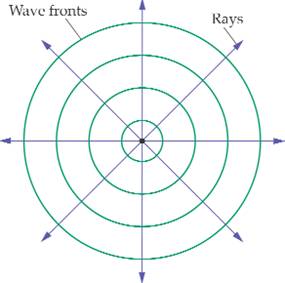
If a stone is dropped into a pond, circular waves emanate from the point where it landed. Rays, perpendicular to the wave fronts, give the direction in which the waves propagate. |
|
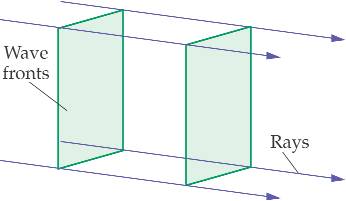
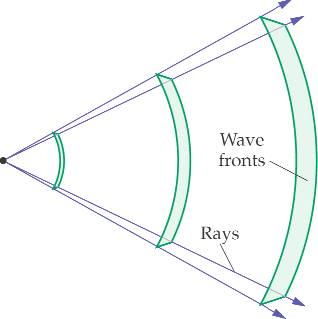
As one moves farther from a point wave source, the wave fronts become nearly flat.
|
|
||||||||||||||||||||||||||||||
|
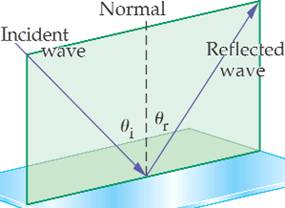
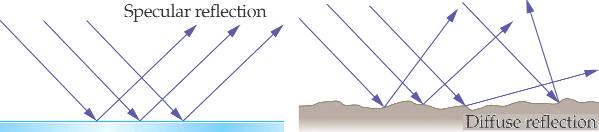
The law of reflection states that the angle of incidence equals the angle of reflection
θi = θr |
|
|
|||||||||||||||||||||||||||||||
|
|
|
||||||||||||||||||||||||||||||||
|
|
|
||||||||||||||||||||||||||||||||
|
26.2 Forming Images with a Plane Mirror |
|
||||||||||||||||||||||||||||||||
|
|
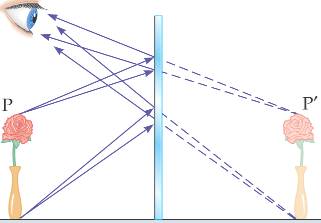
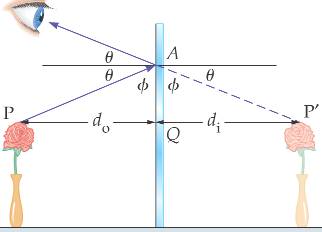
Light reflected from the flower and vase hits the mirror. Obeying the law of reflection, it enters the eye. The eye interprets the ray as having had a straight-line path, and sees the image behind the mirror. |
|
|
||||||||||||||||||||||||||||||
|
Properties of Mirror Images Produced by Plane Mirrors:
|
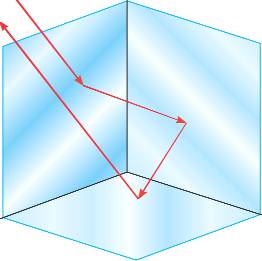
A corner reflector reflects light parallel to the incident ray, no matter the incident angle. |
|
|
||||||||||||||||||||||||||||||
|
|
|
|
|||||||||||||||||||||||||||||||
|
26.3 Spherical Mirrors |
|
||||||||||||||||||||||||||||||||
|
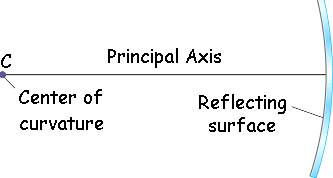
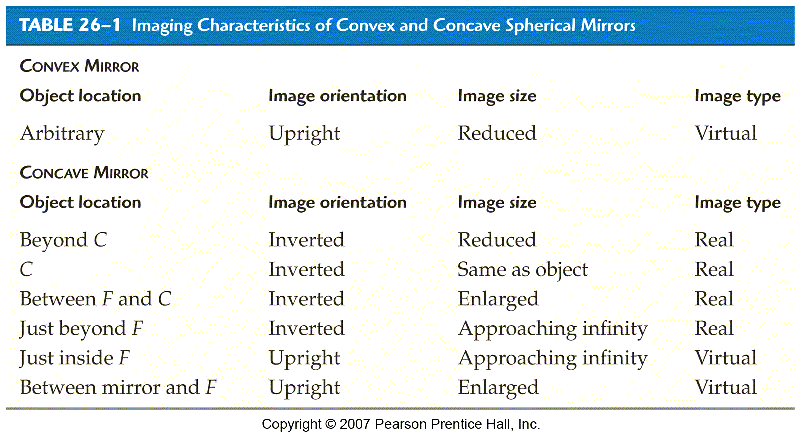
A spherical mirror has the shape of a section of a sphere. If the outside is mirrored, it is convex; if the inside is mirrored, it is concave. |
|
|
|||||||||||||||||||||||||||||||
|
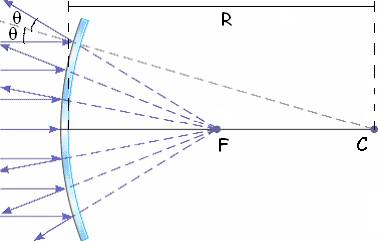
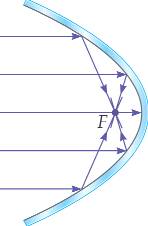
Parallel rays hitting a spherical mirror come together at the focal point (or appear to have come from the focal point, if the mirror is convex) |
|
As you notice the radii of curvature, R, is twice the distance of the focal length.
convex mirrors; f = -½ R concave mirrors; f = ½ R |
|
||||||||||||||||||||||||||||||
|
|
We have made the assumption here that the rays do not hit the mirror very far from the principal axis. If they do, the image is blurred.
This is called spherical aberration, and can be remedied by using a parabolic mirror instead. |
|
|
||||||||||||||||||||||||||||||
|
|
|
|
|||||||||||||||||||||||||||||||
|
26.4 Ray Tracing and the Mirror Equation |
|
||||||||||||||||||||||||||||||||
|
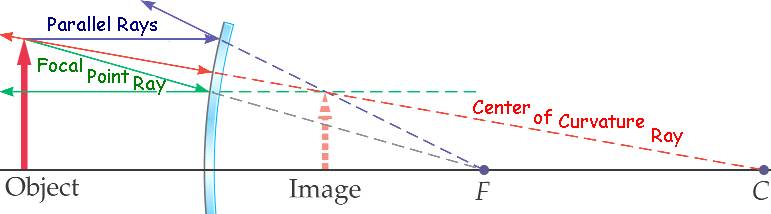
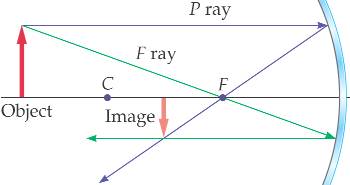
Our book P à Parallel Rays F à Focal Point Rays C à Center of Curvature Rays |
|
|
|||||||||||||||||||||||||||||||
|
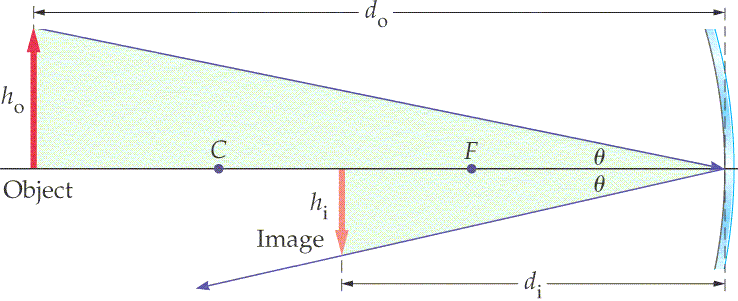
Below shows methods for ray tracing |
|
||||||||||||||||||||||||||||||||
|
|
|
|
|||||||||||||||||||||||||||||||
|
|
|
||||||||||||||||||||||||||||||||
|
|
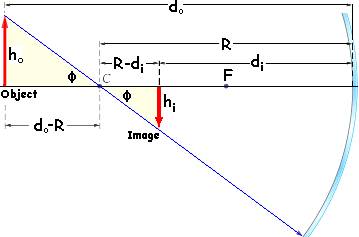
Using the similar triangles and f = ½ R
|
|
|||||||||||||||||||||||||||||||
|
Image Size in a Mirror
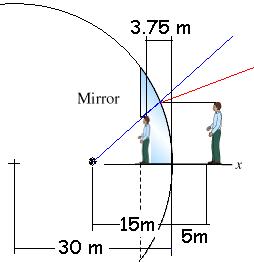
A guy named Joe, who is 1.6 meters tall, enters a room in which someone has placed a large convex mirror with radius of curvature equal to 30 meters. The mirror has been cut in half, so that the axis of the mirror is at ground level. As Joe enters the room, he is 5 meters in front of the mirror, but he is looking the other way, so he fails to see it. When he turns around, he is startled by his own image in the mirror. |
(a) How far away does the image appear to Joe? |
|
|
||||||||||||||||||||||||||||||
|
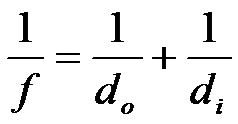
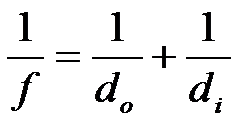
1/f = 1/do + 1/di 1/-15 = 1/5 + 1/di di = -3.75 m |
Distance apart 5 - -3.75 = 8.75 m |
|
|||||||||||||||||||||||||||||||
|
(b) What is the image height that Joe sees in the mirror? |
|
||||||||||||||||||||||||||||||||
|
m ≈ - di / do m = hi / ho hi / ho ≈ -di / do |
hi / ho ≈ -di / do hi / 1.6 ≈ 3.75 / 5 hi = 1.2 m |
|
|||||||||||||||||||||||||||||||
|
(c) Joe is so startled by his image that he falls forward. (His toes remain at original position.) Now what is the length (i.e., the distance from head to toe) of Joe's image? |
|
||||||||||||||||||||||||||||||||
|
1/f = 1/do + 1/di 1/-15 = 1/3.4 + 1/di di = -2.77 m |
di-head - di-foot = -3.75 - -2.77 di-head - di-foot = -.98 meters
|
|
|||||||||||||||||||||||||||||||
|
|
|
|
|
||||||||||||||||||||||||||||||
|
Pin Hole Projection Set Demo: OP-A-PS
|
|
||||||||||||||||||||||||||||||||
|
See
image above for C and F |
|
||||||||||||||||||||||||||||||||
|
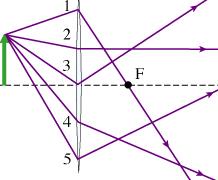
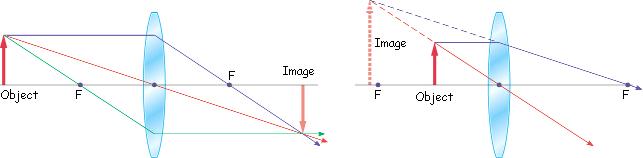
Example (a) The focal point of the lens is labeled F. Five rays are drawn from the tip of the object to the lens, but only one of them is traced through the lens correctly. Choose the ray that is traced correctly. |
|
|
|||||||||||||||||||||||||||||||
|
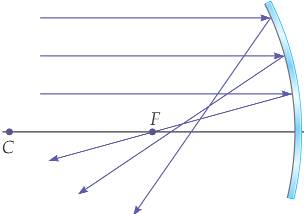
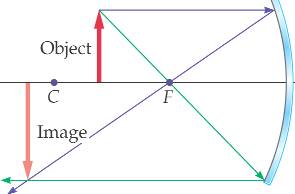
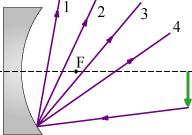
(b) This second figure shows an object to the right of a concave mirror. The focal point of the mirror is labeled F. Four rays are shown reflecting off the mirror, but only one of them is drawn correctly. Choose the ray that is traced correctly. |
|
|
|||||||||||||||||||||||||||||||
|
|
|
||||||||||||||||||||||||||||||||
|
26.5 The Refraction of Light |
|
||||||||||||||||||||||||||||||||
|
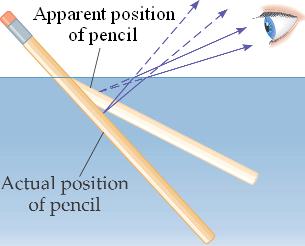
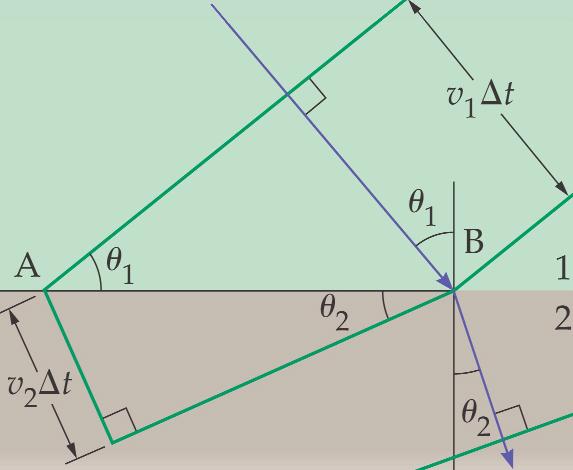
v = c / n definition of n
sin θ / v = sin θ2 / v2 sin θ / c/n = sin θ2 / c/n2
n sin θ = n2 sin θ2
|
|
|
|||||||||||||||||||||||||||||||
|
|
|
||||||||||||||||||||||||||||||||
|
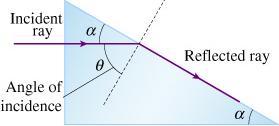
Example Light is incident along the normal to face AB of a glass prism of refractive index 1.65. Find αmax, the largest value of the angle such that no light is refracted out of the prism at face AC if the prism is immersed in air. |
|
n sin θ = n2 sinθ2 1.65sin(90-α)= 1 sin90° α = 52.7°
|
|
||||||||||||||||||||||||||||||
|
|
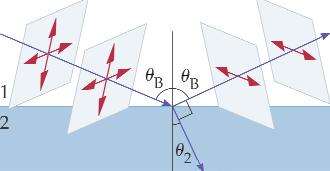
There is a special angle called Brewster’s angle; light reflected at this angle is totally polarized. tanθB = n1 / n2
Reflected light is completely polarized when the reflected and refracted beams are at right angles to one another. The direction of polarization is parallel to the reflecting surface. |
|
|||||||||||||||||||||||||||||||
|
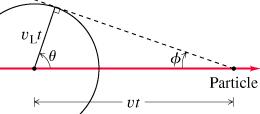
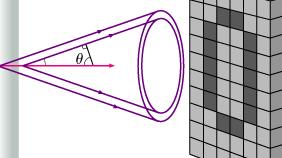
Example When a charged particle passes straight through a medium faster than the local speed of light, it will emit Cerenkov radiation in a cone. If a particle is traveling straight through a material with index of |
|
cos θ = vL t / v t cos θ = vL / v cos θ = c / nv |
|
||||||||||||||||||||||||||||||
|
refraction, n, at a speed, v, what is the angle between the vector of the propagating Cerenkov radiation and the vector in the direction of the propagating particle? Given: vL = c/n (vlight < c) |
|
||||||||||||||||||||||||||||||||
|
You wish to accurately measure the speed of high-energy particles with velocities greater than 98% the speed of light in vacuum. You can use a ring-imaging Cerenkov detector consisting of a thin slab of material separated from an array of photomultiplier tubes by an arbitrary open space. The detector works on the principle that the Cerenkov radiation emitted in the thin slab will be a cone of light that can be measured with the array of PMTs. The PMTs, having a finite width, can only resolve a finite change in the angle of the ring created by the Cerenkov radiation. Which of the following substrate materials is best suited to giving you the greatest precision in determining particle velocity? (c) ice (n = 1.3) (a) diamond (n = 2.417) (d) aerogel (n = 1.03) (b) crown glass (n = 1.52) (e) vacuum (n = 1) |
cos θ = c / n v cos θ = c / n 0.98c cos θ = 1/ 0.98n cos θ = 1/ 0.98(1.03) θ = 7.83° ans (D) |
|
|||||||||||||||||||||||||||||||
|
26.6 Ray Tracing for Lenses |
|
||||||||||||||||||||||||||||||||
|
|
|
|
|
||||||||||||||||||||||||||||||
|
|
|
||||||||||||||||||||||||||||||||
|
|
|
||||||||||||||||||||||||||||||||
|
26.7 The Thin Lens Equation |
|
||||||||||||||||||||||||||||||||
|
|
|
|
|||||||||||||||||||||||||||||||
|
m = hi / ho ≈ di / do |
|
|
|||||||||||||||||||||||||||||||
|
|
|
|
|||||||||||||||||||||||||||||||
|
26.8 Dispersion and the Rainbow |
|
||||||||||||||||||||||||||||||||
|
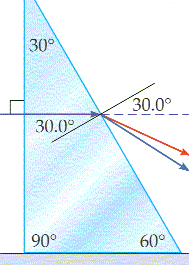
The index of refraction varies slightly with the frequency of light; in general, the higher the frequency, the higher the index of refraction. |
E = h f E ∝f ß ß ß lower energy higher energy à à à Radio micro IR R O Y G B I V UV X γ |
|
|
||||||||||||||||||||||||||||||
|
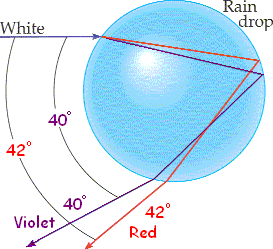
This means that refracted light is “spread out” in a rainbow of colors; this phenomenon is known as dispersion. |
|
||||||||||||||||||||||||||||||||
|
Rainbows are created by the dispersion of light as it refracts in a rain drop. |
|
|
|||||||||||||||||||||||||||||||