|
Ch24 AC Circuits |
||||||||||||||||||||||||
|
ELI the ICE man L à Voltage leads the Current by 90° C à Current leads the Voltageby 90°
|
||||||||||||||||||||||||
|
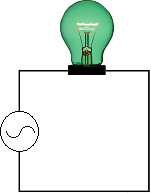
Alternating Current Circuits |
||||||||||||||||||||||||
|
For Resistors, Voltage and current are in phase.
|
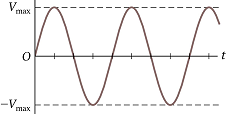
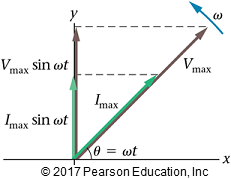
V = Vmax sin(ω t)
I = Imax sin(ω t) (Ohms law à V = IR) |
|
||||||||||||||||||||||
|
instantaneous values of the voltage or current are represented by the phasor is its projection on the y axis.
|
|
|
||||||||||||||||||||||
|
|
|
|||||||||||||||||||||||
|
Alternating Current and Voltage |
||||||||||||||||||||||||
|
Obviously if you take the average of a sinusoidal wave, it is ZERO. For sinusoidal waves, we refer to the ROOT MEAN SQUARE (rms), xave2 = ½ xmax2 xrms = xmax/√2 = 0.707 xmax |
|
|||||||||||||||||||||||
|
Example
|
|
|||||||||||||||||||||||
|
Capacitors in AC Circuits |
||||||||||||||||||||||||
|
Just for fun, let’s look at the true definition. We know I = Δq/ Δt I = dq/ dt I = d[CVmaxsin(ωt)] / dt I = C ω Vmaxcos(ωt) I = C Vmaxωsin(ωt + 90°) I = qmaxω sin(ωt + 90°) I = Imaxsin(ωt + 90°) So we know current, I, leads V, voltage, by 90° V = C ω Vmaxsin(ωt)
|
q = C V q = C Vmax sin(ωt)
What is the maximum value of sin(ωt)? Sine varies between -1 to 0 to +1 So Vmaxsin(ωt) = 1
sin(ωt + 90°) = cos (ωt)
*******Let’s test sin(120°) = cos(30°) = 0.866 sin(150°) = cos(60°) = ½ sin(180°) = cos(90°) = 0
|
|||||||||||||||||||||||
|
· We know capacitors charge (or discharge) proportional to the rate of voltage change. · The faster the voltage changes the more charge flows. · The slower the voltage changes the less current. o As a result we can conclude the reactance of an AC capacitor is “inversely proportional” to the frequency of the supply |
||||||||||||||||||||||||
|
Capacitance Reactance has the units of and analogous to Resistance XC = 1 / 2πfC XC = 1/ ωC |
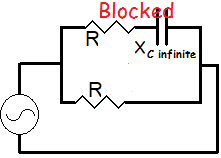
· What happens when freqà infinity? o Ans: this is Short Circuit · What happens when freqàzero? o Ans: DC circuits, this is why capacitors block direct current |
|||||||||||||||||||||||
|
Example
|
|
|||||||||||||||||||||||
|
RC Circuits |
||||||||||||||||||||||||
|
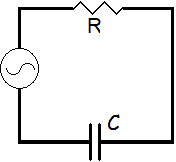
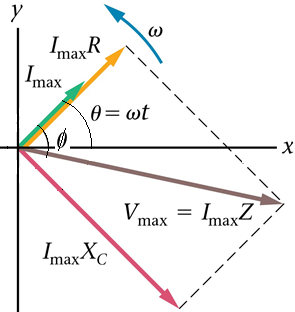
As we saw above the current in a resistor and capacitor are not in phase. This means that the maximum current is not the sum of the maximum resistor current and the maximum capacitor current; they do not peak at the same time.
|
|
|||||||||||||||||||||||
|
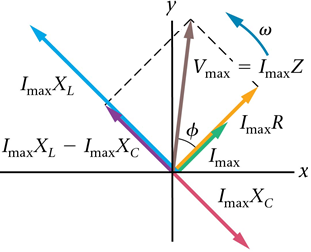
Vmax2 = (Imax R)2 + (ImaxXC)2 Vmax = Imax √(R2 + XC2)
Impedance, Z = √(R2 + XC2) Remember XC = 1 / 2πfC XC = 1/ ωC
Pave = IrmsVrmscosφ; as a result cosφ is called the Power Factor
|
|
|||||||||||||||||||||||
|
|
|
|||||||||||||||||||||||
|
Example
|
|
|||||||||||||||||||||||
|
Inductors in AC Circuits |
||||||||||||||||||||||||
|
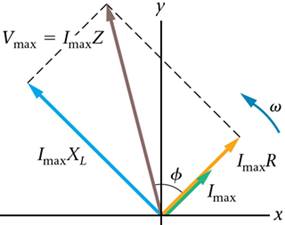
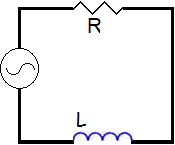
Inductive Reactance = XL = ωL with units of Ohms
Impedance, Z = √(R2 + XL2)
|
|
|||||||||||||||||||||||
|
|
|||||||||||||||||||||||
|
Example
|
|
|||||||||||||||||||||||
|
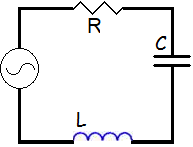
RLC Circuits |
||||||||||||||||||||||||
|
Z = [(R2 + (XL – XC)2)]½
If XL = XC the phase angle is zero
|
|
|||||||||||||||||||||||
|
|
|
|
||||||||||||||||||||||
|
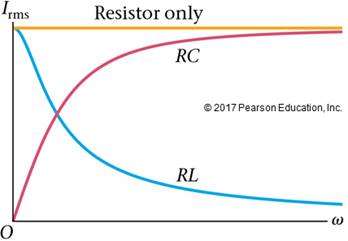
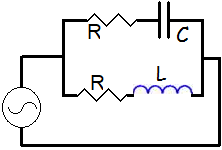
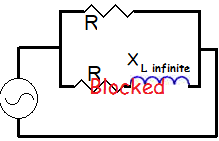
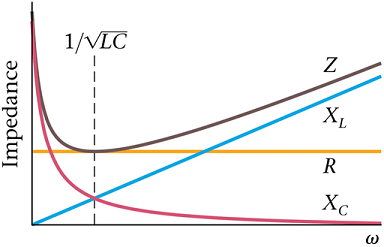
At high frequencies, the capacitive reactance is very small, while the inductive reactance is very large |
At low frequencies, the inductive reactance is very small, while the capacitive reactance is very large |
|||||||||||||||||||||||
|
Example
|
|
|||||||||||||||||||||||
|
Resonance in Electric Circuits |
||||||||||||||||||||||||
|
In an RLC circuit with an ac power source, the impedance is a minimum at the resonant frequency
Resonance occurs at Z = R
ωo = 1 / √(LC) = 2πfo
|
|
|||||||||||||||||||||||
|
Example Your microwave oven uses a magnetron that resonates at 2.7 GHz approximating an RLC circuit. If the capacitance is of the magnetron is 5×10⁻¹³ F, what is the value of its inductance? |
ω = 1 / √(LC) = 2 π f L = 1 / C (2 π f )2 L = 1 / 5e-13 (2 π 2.7e9)2 L = 6 x 10⁻⁹ Henry’s
|
|||||||||||||||||||||||