|
1.1 Standards of length,
mass, & time 1.2 Matter & 1.3 Density & Atomic
Mass 1.4 Dimensional Analysis |
1.5 Conversion of Units 1.6 Estimates & Order of Magnitude
Calculations 1.7 Significant Figures & Uncertainty
Propagation 1.7 (121)
Scalars & Vectors |
|||||||
|
1.1
Standards of length, mass, & time |
||||||||
|
The meter The meter originally defined as |
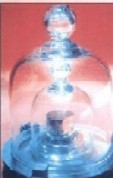
The kilogram The kilogram (kg) is defined as the mass of a
specific Pl-Ir alloy cylinder kept at the IBWM at |
The second Initially the second was defined at We know that the earth's rotation is slowing, so
now the second is defined by 9192631770 vibrations of a Cs atom. |
||||||
|
Demo: Standard Units of Measurement: ME-A-SU Demo:
Volume Comparison: ME-A-VC cc’s from 1 g/cc from meters |
||||||||
|
1.4
Dimensional Analysis & 1.5 Conversion of Units |
||||||||
|
You
are driving along the highway with you speed of 60 mph So
the units of speed is miles / hour ·
Speed à miles /
hour ·
Speed à meters / second * New Formula
* speed = distance / time So
is it possible for the units of speed to be m/s2? m / s ≠ m / s2 So this is an impossibility |
You
are at a red traffic light. The light
turns green. What do you do? Ans: You step on the accelerator (or gas pedal). See
table to the right à If
you notice the Δspeed per unit time is
constant Δ is read as
“change of” * New Formula
* acceleration = Δ velocity / Δtime |
The accelerator increases speed per unit time. 0 to 1 sec: 0 to 5
mph 1 to 2 sec: 5 to 10
mph In
lecture we discuss the difference between speed (a magnitude) and speed with
direction (magnitude w/direction). Velocity
is speed with direction which is a vector
quantity |
||||||
|
You
are driving along the highway with you speed of 60 mph. Let’s convert this to miles per hour using
estimations. 60 miles 1 hour 1800
yard 1 meter = 30 m/s or 2 mph ≈
1 m/s hour 3600 sec 1 mile 1
yard As you can see…these are rough approximations. In reality there is about 2.2 mph = 1.0 m/s But the IMPORTANT key to recognize…these calculations are easily
completed…no calculator is needed ! |
||||||||
|
1.7 Uncertainty (Sig Figures from book) |
||||||||
|
·
Always reported as absolute uncertainty ·
NEVER show
fractional uncertainty in a decimal form (looks like absolute uncertainty) ·
Rules below w/ examples ·
Always carry and extra sig fig through work until
the final answer |
||||||||
|
a
= 10 ± 1 |
b
= 2.0 ± 0.3 |
c
= 3.0 ± 0.1 |
||||||
|
Uncertainty
that is added or subtracted: ABSOLUTE uncertainty is added |
||||||||
|
a + b = (10 ± 1) +
(2.0 ± 0.3) = 12 ± 1.3 a + b = 12 ± 1 Or 12 ± 2
(uncertainties always become larger with rounding) |
a – b = (10 ± 1) -
(2.0 ± 0.3) = 8.0 ± 1.3 a - b = 8 ± 1 Or 8 ± 2
|
|||||||
|
Uncertainty
that is multiplied or divided: FRACTIONAL (or percent) uncertainty is added |
||||||||
|
a * b = (10 ± 1)
* (2.0 ± 0.3) = 10 * 2 ± (1/10 + 0.3/2) = 20 ± 5 |
a / b = (10 ± 1) / (2.0 ± 0.3) = (10 ± 1/10) / (2.0 ± 0.3/2) = (10 ± 10%) / (2.0 ± 15%) = 10 / 2
± (10% + 15%) = 5 ± 25% = 5 ± 25% * 5 -------> Converting back to ABSOLUTE = 5 ± 1 OR
5 ± 2 (Uncertainties
round up) |
|||||||
|
Uncertainty that is raised to a power: FRACTIONAL (or percent)
uncertainty is multiplied by that power |
||||||||
|
a2 = (10 ± 1)2 = (10 ± 1/10)2 = (10 ± 10%)2 = 102 ± 10% *
2 = 100 ± 20% = 100 ± (20% * 100) = 100 ± 20 |
a1/2 = (10 ± 1)½ = (10 ± 1/10)½ = (10 ± 10%)½ = 10½ ± (10% * ½) = 3.2 ± 5% = 3.2 ± (5% * 3.2) = 3.2 ± 0.2 |
|||||||
|
a
* b + c =
(10 ± 1) * (2.0 ± 0.3) +
3.0 ± 0.1 =
20 ± 5 +
3.0 ± 0.1 =
20 + 3 ±
(5 + 0.1) = 23 ± 5.1 (but
uncertainty must be to same decimal place) = 23 ± 6 |
a
/ b - c =
(10 ± 1) / (2.0 ± 0.3) -
3.0 ± 0.1 =
5 ± 1.25 -
3.0 ± 0.1 =
5 – 3.0 ± (1.25 + 0.1) =
2 ± 1.35 = 2 ± 2
(uncertainty should not round down) or 2.0 ± 1.4 (I prefer…but doesn’t follow 1 sig fig for uncertainty rule) |
|||||||
|
a3
* b / c =
(10 ± 1)3 * (2.0 ± 0.3) / 3.0 ± 0.1 =
667 ± 48.3% =
667 ± 322 = 670 ± 330 or Remember…I prefer 2 sig figs for
uncertainty…but rule states = 700 ± 400 you
can only have one sig fig for uncertainty |
||||||||
|
One last uncertainty problem a3
* b / c -
(a –
b) =
(10 ± 1)3 * (2.0 ± 0.3) / 3.0 ± 0.1 - [10 ± 1) - (2.0 ± 0.3] =
667 ± 48.3% - (8 ± 1.3) =
667 ± 322 - (8 ± 1.3) =
(667 – 8) ± (322 + 1.3) =
659 ± 323 =
660 ± 330 (I prefer this) = 700 ± 400 (Standard recognized correct
answer) So the real value falls somewhere between 300 to 1100 (quite a
big range) |
||||||||
|
Another uncertainty problem 4 / a(1/2) * (
a * b - a
* c / b2) =
4 /(10 ± 1)1/2 * [10 ± 1 * 2.0 ± 0.3 - 10 ± 1 *
3.0 ± 0.1 / (2.0 ± 0.3)2 ] =
4/3.32 ± (½ 1/10) * [20 ± (1/10 + 0.3/2.0) - 7.5 ± (1/10 + 0.1/3 + 2 (0.3/2) ] =
1.20 ± (½ 10%) * [20 ± (10% + 15%) -
7.5 ± (10% + 3.33% + 2*15%) ] =
1.20 ± 5% * [20 ± 25% - 7.5 ± 43.33% ] =
1.20 ± 5% * [20 ± 5 - 7.5 ± 3.25 ] =
1.20 ± 5% * (12.5 ± 8.25) =
1.20 ± 5% * (12.5 ±
8.25/12.5) =
1.20 ± 5% * (12.5 ± 66%) =
15 ± 71% =
15 ± 10.65 = 15 ± 11 (Using 2 sig figs for
uncertainty) |
||||||||
|
1.7 (121) Scalars & Vectors |
||||||||
|
One
day you decide to drive your car for 1 hour.
There is no traffic and you drive at a speed of 65 miles per
hour. Where are you? You
can easily determine you have traveled about 65 miles. But which direction? |
SCALAR: 65 miles is a scalar. This is just a magnitude of a value, no
direction is given. You
must also know which direction to know you final location. VECTOR: A magnitude WITH a direction is called a
vector. |
|||||||