|
Chapter 9: Linear Momentum |
|||||||||||||||||||
|
9.1: Linear Momentum and Its Conservation 9.2: Impulse and Momentum |
9.5: The Center of Mass 9.7: Rocket Propulsion |
||||||||||||||||||
|
9.1:
Linear Momentum and Its Conservation |
|||||||||||||||||||
|
Our
book states that in isolated
systems momentum is conserved. |
|||||||||||||||||||
|
ΣF = ma + m2a2 = 0 à
ΣF = d (mv + m2v2)
/ dt = 0 pbefore = pafter à à à |
If
two particles strike each with equal and opposite force then And
since sum is constant...the total momentum in a system must also be constant Where
a is in the opposite direction of a2 and
a = dv/dt A
couple of interesting notes: thus
the sum must be constant or conserved |
||||||||||||||||||
|
9.2: Impulse and Momentum |
|||||||||||||||||||
|
Let's play with units... kg
m/s kg
m/s (s/s) kg
m/s (s/s) = |
Multiply
both sides by seconds / seconds |
||||||||||||||||||
|
F
= m a F
= m dv/dt
∫
F dt =
∫m dv FΔt =
m Δv FΔt =
Δmv FΔt =
Δp |
Let’s assume F is independent of time Impulse (F dt) = change of momentum (Δp = Δmv) |
||||||||||||||||||
|
Demo: Half-Liter Paper Rocket:
ME-N-PR Estimate
the distance of the deformed tip of the rocket. Use d = ½at2 to determine time
of impact. Calculate
Force exerted on Rocket during this time. |
|||||||||||||||||||
|
9.3: Collisions in One Dimension |
|||||||||||||||||||
|
BIG
SUV…small car (BUG) Smash
small car on grill of big SUV pbefore = pafter when
à à à |
If we account for all parts (objects) then
momentum is conserved during
the collision (this is a closed system) |
||||||||||||||||||
|
Let’s say a 7000 kg SUV (totally loaded) is
traveling North at 90 mph (about 40 m/s) and a little car, let’s call it a
bug, and is traveling to the south at 65 mph (about 30 m /s). These are both controlled remotely. We ram them together. What happens? pbefore = msuvvsuv + mbugvbug; pafter = msuvvsuv-f
+ mbugvbug-f pbefore = pafter
msuvvsuv + mbugvbug
= (msuv + mbug)
vf but bug is squashed on
grill, thus final velocity is identical 7000(40) + 1000(-30) = (7000 + 1000) vf 250000 =
8000 vf vf = 33 1/3 m/s |
|||||||||||||||||||
|
The
final velocity is 33 1/3 m/s. The
Massive SUV goes from 40 to 33 1/3 m/s for a change of 6 2/3 m/s. That’s
like hitting a concrete wall doing about 14 to 15 mph. The SUV is wrecked badly. |
The
bug is traveling in the opposite direction…thus a negative. So
the bug starts at -30 m/s and end up at 33 1/3 m/s…or a change of 63 1/3 m/s
or about 140 mph directly in a concrete wall.
|
||||||||||||||||||
|
Like we said earlier…the
bug is squash on the grill of the SUV. |
|||||||||||||||||||
|
9.4: Two-Dimensional Collisions |
|||||||||||||||||||
|
Σpxi = constant Σpxf = constant KEi = KEf |
First
off, this is an artificial situation. 3D is a must; we're looking at this as
a 2D equation for simplicity. |
||||||||||||||||||
|
A 2D Look at a Neutron Moderator |
|||||||||||||||||||
|
Initial |
Final |
||||||||||||||||||
|
px = (m) 3.5 x 10⁵ + 0
Kinitial = ½(m) (3.5 x 10⁵)2
+ 0 |
px = (m) v1x + (m) v2x px = (m) v1 cos 37° + (m) v2x
cos φ
py = (m) v1
sin 37° + (m) v2 sin
φ Kfinal = ½(m) v12
+ ½(m) v22 |
||||||||||||||||||
|
Kinetic
energy isn't broke into components (v2, a scaler). Kinetic
energy is conserved in elastic collisions only; where Ktotalbefore
= Ktotalafter |
|||||||||||||||||||
|
px
à (m) 3.5 x 105 = (m) v1 cos
37° + (m) v2x cos φ Eq (1) px à 3.5 x 105
= v1f cos
37° + v2f cos
φ Eq (2) py à 0
= v1f sin 37° + v2f sin φ Eq (3) K
à (3.5 x 10⁵)2 = v1f2
+
v2f2 |
|||||||||||||||||||
|
v1f
= 2.80 x 10⁵ m/s v2f
= 2.11 x 10⁵ m/s φ
= 53.0° |
Solve these 3 equations
simultaneously |
||||||||||||||||||
|
|
|
||||||||||||||||||
|
9.5: The Center of Mass |
|||||||||||||||||||
|
|
|||||||||||||||||||
|
If
3D then
CMx = 1 /mT ∫x dm |
CMy = Σmi*yi / mT CMy = 1 /mT
∫y dm |
CMz = Σmi*zi / mT CMz = 1 /mT
∫z dm |
|||||||||||||||||
|
Where
is the center of mass in a rod is λ = mass / length How
do we find the center of mass of a homogeneous symmetric object (Like
solid 2D square or
the figure to the right)? IT's AT THE CENTER |
|
||||||||||||||||||
|
Just
as obvious is the center of mass of the above bar bell set, where the center
of mass is marked by the “X”. This
time…let’s write the expression for the center of mass. à à à |
m1x1
+ m2x2 |
||||||||||||||||||
|
Now
we just extend this principle to many more objects for the x, y, and z axis. |
And rCM = xCM
i
+ yCM j + yCM k |
||||||||||||||||||
|
Σi mixi xCM = ———— Σi mi |
Σi miyi yCM = ———— |
Σi mizi zCM = ———— Σi mi |
Σi miri |
||||||||||||||||
|
|
|||||||||||||||||||
|
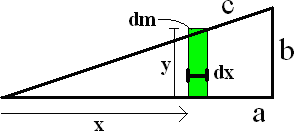
Example 9.14:
Where is the center of mass of a right triangle? |
|||||||||||||||||||
|
We
need mass / unit area of the triangle (total mass / total area) dm = mass / unit area * area of green strip |
|
||||||||||||||||||
|
dm
= 2M/ab * y dx dm
= 2M/ab * y dx |
xCM = 1/M
∫ x dm integrate from 0 to a |
||||||||||||||||||
|
Expression
for equivalent proportions |
|||||||||||||||||||
|
Example 3:
Center of Mass for varying linear density |
|||||||||||||||||||
|
λ is mass per unit length (g / m) m = 0.96 grams |
Where
is its center of mass from x = 0? |
||||||||||||||||||
|
Demo:
Walking the Spool: ME-K-WS Demo: Center of Mass O.C Ruler: ME-J-CE |
|||||||||||||||||||
|
9.6: Motion of a System of Particles |
|||||||||||||||||||
|
A
rocket is fired vertically upward. At
the instant it reaches an altitude of 1000 meters and a speed of 300 m/s it
explodes into three fragments. The 1st
fragment has twice the mass of either the 2nd or 3rd
fragments and continues to move upward with a speed of 200 m/s. The second fragment has a speed of 240 m/s
and is moving east right after the explosion.
What is the velocity of the 3 fragment? |
|||||||||||||||||||
|
Whole
= 1st frag + 2nd frag + 3rd frag 4
m =
2 m + m
+ m |
|||||||||||||||||||
|
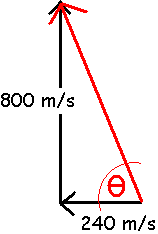
Vertical components pbefore = pafter 4m(300) = 2m(v1) + m(v3y) (v1 is
all y-comp) 4m(300) = 2m(v1) + m(v3y) 1200 = 2(200) + (v3y) v3y
= 800 m/s |
Horizontal components pbefore = pafter 0 = 2m(v2) + m(v3x) (v2 is all x-comp) 0 = m(v2) + m(v3x) 0 = (240) + (v3x) v3x
= -240 m/s |
|
|||||||||||||||||
|
v3rd = (2402 + 8002)½
v3rd = 835.2 m/s @ 106.7° |
q3rd = tan-1(800/240)
q3rd = 73.3° We want 180 - q3rd |
||||||||||||||||||
|
|
|||||||||||||||||||
|
9.7: Rocket Propulsion |
|||||||||||||||||||
|
pbefore = pafter procket&fuel =
procket + pfuel (M+Dm)v = M(v + Dv) + Dm(v - vexhaust) Mv +Dmv = Mv + MDv + Dmv - Dmvexh 0 = MDv - Dmvexh MDv = Dm vexh (the velocity of the Mdv = vexh dm exhaust
is a constant) (limit of m à 0) Mdv =
-vexh dM
òdv = -vexh òdM / M Dv = vexh ln (Mi
/ Mf) |
M
is the mass of the rocket (which may also containing some remaining fuel) We
know downward momentum of the exhaust opposes the upward momentum of the
rocket… thus vexhaust dm
= -Dv
dM We
know that the dm = -dM dM is the mass of the rocket with the remaining
fuel and dm is the spent fuel. As more
and more fuel (+dm) exits the rocket (-dM, mass of
rocket) is reduced (-) accordingly |
||||||||||||||||||
|
FThrust = m a FThrust = m dv/dt FThrust = vexh
dM/dt |
|
||||||||||||||||||
|
|||||||||||||||||||