|
Ch 14 – Oscillatory
Motion |
||||||||||||||||||||||||
|
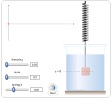
Motion of an Object Attached
to a Spring |
||||||||||||||||||||||||
|
The
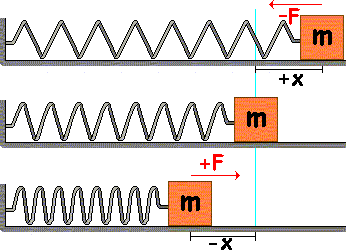
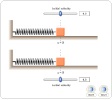
restoring force (Hooke’s law) is the force applied
by a spring to bring the system back to equilibrium. |
||||||||||||||||||||||||
|
v
= dx/dt |
FNet = ma; Fs = -kx |
|
|
|||||||||||||||||||||
|
a
= dv/dt |
ma =
-kx |
|||||||||||||||||||||||
|
a
= d2x/ dt2 |
a =
-(k/m) x |
|||||||||||||||||||||||
|
d2x/ dt2
= -(k/m) x |
||||||||||||||||||||||||
|
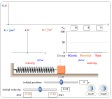
Harmonic
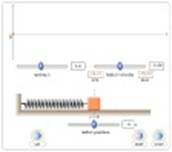
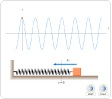
Motion: Simple: OW-A-HS (use apparatus of Driven, below) |
||||||||||||||||||||||||
|
Mathematical
Representation of Simple Harmonic Motion |
||||||||||||||||||||||||
|
d2x/ dt2
= -(k/m) x Now
we have to find a math function that fits this case. First
we’re going to allow ω2 = k/m why ω2; we know the result… and
it’s best for simplification of our equations if ω2 = k/m |
d2x/ dt2 = -(k/m) x d2x/ dt2 = - ω2x |
|
||||||||||||||||||||||
|
We’ll
use the following solution x(t) = A cos(ωt + φ) (sine
also works…but we’re choosing cosine) |
||||||||||||||||||||||||
|
v = dx/dt = -A ω sin(ωt +
φ) a = dv/dt = -A ω2 cos(ωt + φ) Where
φ is the phase constant; ω = √(k/m) is angular velocity (in radians) which
is also called angular frequency T = 1/f ω = 2πf |
||||||||||||||||||||||||
|
A
simple harmonic oscillator takes 12.0 s to undergo five complete vibrations.
Find (a)
the period of its motion (b)
the frequency in hertz (c) angular
frequency in radians/sec |
(a) T = 12
sec / 5 vib T = 2.4 sec |
(b) f =
1/T f = 1
/ 2.4 f = 0.417 Hz |
(c) ω
= 2πf ω
= 2π(0.417) ω = 2.62 rad/s |
|||||||||||||||||||||
|
Energy of the Simple
Harmonic Oscillator |
||||||||||||||||||||||||
|
K = ½ mv2 |
U = ½ kx2 |
|
||||||||||||||||||||||
|
K
= ½ m(-A ω sin(ωt + φ)) 2 K
= ½ m A2 ω2 sin2(ωt
+ φ) |
U
= ½ k (A cos(ωt +
φ))2 U
= ½ k A2 cos2(ωt +
φ) |
|||||||||||||||||||||||
|
TE = K + U; sin2θ
+ cos2θ = 1; ω2
= k/m |
||||||||||||||||||||||||
|
TE
= ½ m A2 ω2 sin2 (ωt
+ φ) + ½ k A2 cos2
(ωt + φ) TE
= ½ m A2 (k/m) sin2 (ωt
+ φ) + ½ k A2 cos2 (ωt + φ) TE = ½kA2
|
||||||||||||||||||||||||
|
Example A 200-g block is attached to a horizontal spring and executes
simple harmonic motion with a period of 0.250 s. If the total energy of the system
is 2.00 J, what is the amplitude of the motion? |
TE
= ½kA2 A2
= 2 TE / k A2
= 2 (2) / 126.3 A = 0.178 meters |
ω2
= k/m; ω = 2πf; f = 1/T 4π2/T2
= k/m k
= 4 π2 m / T2 k
= 4 π2 m / T2 k = 126.3 N/m |
||||||||||||||||||||||
|
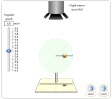
Comparing Simple Harmonic
Motion with Uniform Circular Motion |
||||||||||||||||||||||||
|
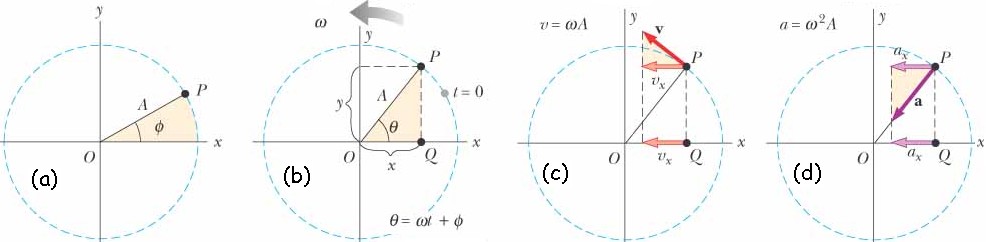
x(t)
= A cos(ωt + φ) |
||||||||||||||||||||||||
|
|
||||||||||||||||||||||||
|
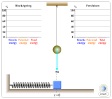
The Pendulum |
||||||||||||||||||||||||
|
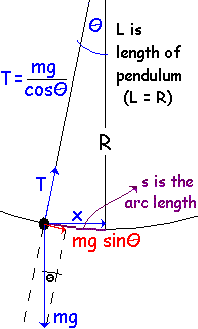
θ
< 10°; tan
θ = sin θ = θ (θ
must be in radians) s = L
θ |
|
Στ = I α x
= d = sinθ R (lever arm) τ = F•d Στ =
I α mg(sinθ R) =
I (d2θ/dt2) at small
angles mgR θ = I
(d2θ/dt2) d2θ/dt2 = (mgR/I) θ
in the same form as d2x/dt2 = -(k/m) x with the solution of x(t) = A cos(ωt + φ) where ω = √(k/m) θ(t) = θmax cos(ωt + φ) where ω = √(mgR/I); used to measure the moment of inertia T = 2π √(L/g) |
Torsional Pendulum Any suspended rod with a
mass attached at the bottom, when torqued rotates
as a Torsional pendulum where τ = - κθ Στ = I α Στ = I (d2θ/dt2) - κθ = I (d2θ/dt2) d2θ/dt2 = -(κ/I) θ in the same form as d2x/dt2 = -(k/m) x θ(t) = θmax cos(ωt + φ) where ω = √( κ /I) T = 2π √(I/ κ) |
|||||||||||||||||||||
|
F
= ma |
F
= -mg sinθ |
|||||||||||||||||||||||
|
ma
= -mg sinθ
a
= -g sinθ
d2s/dt2
= -g sinθ d2s/dt2
= -g θ Ld2θ/dt2
= -g θ d2θ/dt2
= -(g/L) θ in the same form as d2x/dt2 = -(k/m) x with the solution of x(t) = A cos(ωt + φ) where ω = √(k/m) θ(t) = θmax cos(ωt + φ) where
ω = √(g/L) T = 2π/ω = 2π/√(g/L) |
||||||||||||||||||||||||
|
Example A man
enters a tall tower, needing to know its height. He
notes that a long pendulum extends from the ceiling almost to the floor and that its period is 12.0 s. How tall is the tower? |
T = 2π √(L/g) L =
T2 g /4π2 L = 122 (9.8)/ 4π2 L = 35.7 meters |
|||||||||||||||||||||||
|
|
||||||||||||||||||||||||
|
Damped Oscillations |
||||||||||||||||||||||||
|
Damped
Oscillator: Amplitude decreases in time until stops. |
Natural
Frequency: The freq w/o a resistive force, bv |
|
||||||||||||||||||||||
|
ΣFx = -kx –bvx = m
ax section 6.4 -kx –b vx = m
ax -kx –b
dx/dt = m d2x/dt2
solution
(when resistive
force is insignificant)
where |
||||||||||||||||||||||||
|
where
ωo2 = k/m and ωo is called the natural frequency |
|
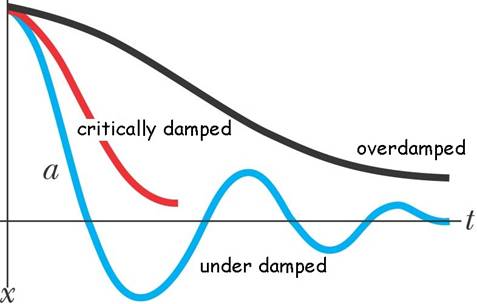
underdamped |
critically damped |
overdamped |
||||||||||||||||||||
|
bvmax < kA |
bcrit/2m = ωo |
bvmax > kA and b/2m > ωo |
||||||||||||||||||||||
|
Example A pendulum with a length of 1.00 m is released from an initial angle of 15.0°. After 1000
s, its amplitude has been reduced by friction to 5.50°. What is the value of b/2m? |
x = A e-bt/2m |
5.5/15 =
e-b(1000)/2m ln(5.5/15) =
-1000b / 2m -1.003 = -1000b / 2m b/2m = 0.001 s-1 |
||||||||||||||||||||||
|
xf = Ae-b(1000)/2m |
||||||||||||||||||||||||
|
xi = A
e-bt/2m |
||||||||||||||||||||||||
|
|
||||||||||||||||||||||||
|
5.5 = e-b(1000)/2m |
||||||||||||||||||||||||
|
15 =
e (0)b/2m |
||||||||||||||||||||||||
|
Forced Oscillations |
||||||||||||||||||||||||
|
Harmonic
Motion, Driven OW-A-HM |
||||||||||||||||||||||||
|
By
applying a constant force that does positive work, we can compensate the loss
of amplitude for a damped oscillator. The
classic example is the child on a swing…to maintain a large amplitude the
child must maintain an energy input by pumping his/her legs. (legs pumping) (resistive force)
(Hooke’s law) ΣF = Fcyclic added
force – b v - kx ΣF = Fo sin ωt –
b dx/dt - kx |
Solution
is x(t) = A cos(ωt
+ φ) When
ω is approx equal to ωo and
when b is small {b (as in –bv) is called the
damping term} resonance
occurs. Resonance occurs when a small energy input (positive work) leads
to a dramatic increase in amplitude near the natural frequency, ωo. |
|||||||||||||||||||||||
|
** The below
section is copied verbatim from Serway/Jewitt ** The
applied force is in phase with the velocity at resonance frequency. The rate
at which work is done on the oscillator by F equals the dot product F•v; this rate is the power delivered to the
oscillator. Because the product F•v is a maximum when F and v are in phase, we conclude
that at resonance the applied force is in phase
with the velocity and the power transferred to the oscillator is a maximum. |
||||||||||||||||||||||||
|
Example A weight of 40.0 N is suspended from a spring that has a force
constant of 200 N/m. The system is undamped and is
subjected to a harmonic driving force of frequency 10.0 Hz, resulting in a
forced-motion amplitude of 2.00 cm. Determine the maximum value of the
driving force. |
Since
b = 0, |
|||||||||||||||||||||||
|
ω
= 2πf ω
= 2π10 ω
= 20 π ω2 = 4000 s-2 |
ωo2
= k
/ m ωo2
= 200/4 kg ωo2 = 50 rad2/s2 |
A = F /m
/ (ω2 - ωo2) 0.02 = (F/4) /(4000-50) F = 316 N |
||||||||||||||||||||||