|
Ch 21 – Superposition
and Standing Waves |
||||||||||||||||||||||||||
|
Superposition and
Interference |
||||||||||||||||||||||||||
|
Differences
between waves and particles Particles
have (1) zero size and (2) must exist at different location Waves
have (1) characteristic size, λ, and can (2) combine at
one point |
||||||||||||||||||||||||||
|
(a) If two or more traveling waves are moving through a medium,
the resultant value of the wave function at any point is the algebraic sum of
the values of the wave functions of the individual waves (b) Waves that obey the superposition principle are linear
waves |
(c) For mechanical waves, linear waves have amplitudes much
smaller than their wavelengths (d) Two traveling waves can pass through each other without
being destroyed or altered, because of the superposition principle |
|||||||||||||||||||||||||
|
Interference is the combination of separate waves in the same region
of space which produces a resultant wave |
|
|||||||||||||||||||||||||
|
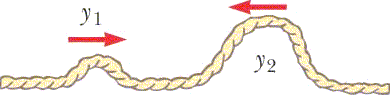
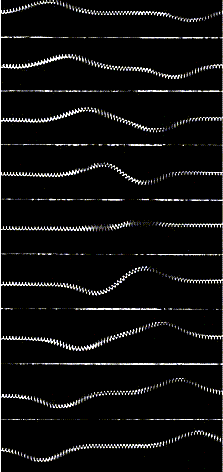
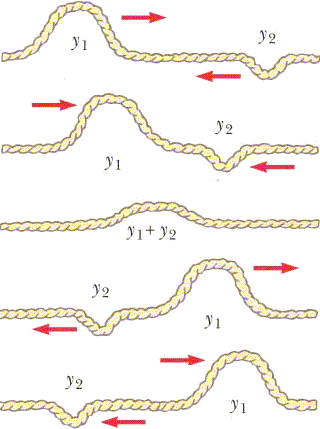
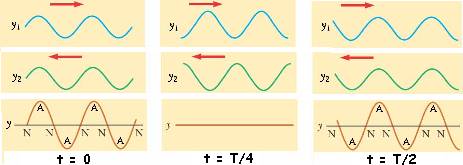
The
two pulses, y1 & y2, with elements of positive
displacement are traveling in opposite directions with same speeds |
|
|||||||||||||||||||||||||
|
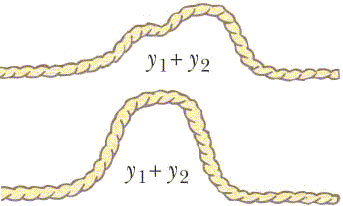
Waves
start to overlap, the resultant wave function is y1 + y2 When
crest meets crest the resultant wave has a larger amplitude than either of the
original waves |
|
|||||||||||||||||||||||||
|
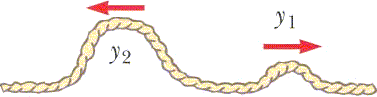
The
two pulses separate They
continue moving in their original directions The shapes of the pulses remain
unchanged |
|
|||||||||||||||||||||||||
|
Below
two equal, symmetric pulses are traveling in opposite directions on a
stretched spring, obeying the superposition principle. |
Below
(rope and spring) two pulses are traveling in opposite directions. Their
displacements are inverted with
respect to each other. |
|||||||||||||||||||||||||
|
|
|
When
they overlap, their displacements partially cancel each other |
||||||||||||||||||||||||
|
|
||||||||||||||||||||||||||
|
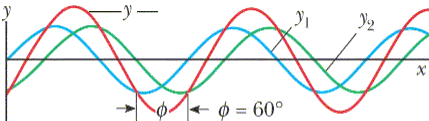
If
two identical waves are traveling in the same direction, with the same
frequency, wavelength and amplitude; BUT differ in phase the waves add
together. y
= y1
+ y2
where y1 = A sin
(kx - ωt) and y2 = A sin (kx - ωt +
φ) y
= A sin(kx - ωt) + A sin(kx -
ωt + φ) Apply
trig identity: sin a + sin b = 2 cos((a-b)/2) sin((a+b)/2)
A sin ( a
) + A
sin ( b ) =
2A cos((a-b)/2) sin((a+b)/2) y
= 2A cos (φ /2) sin (kx - ωt + φ/2) The
resultant sinusoidal wave has the same frequency and wavelength as the
original waves, but the amplitude has changed: Amplitude
equals 2A cos (φ /2) with a phase angle
of φ/2 |
||||||||||||||||||||||||||
|
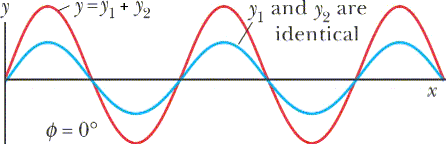
Constructive
Interference When
φ = 0 (crest to crest
and trough to trough), then cos (φ
/2) = 1. The
amplitude of the |
|
|||||||||||||||||||||||||
|
resultant
wave is A1 + A2
= 2A. The waves are “in phase.” |
||||||||||||||||||||||||||
|
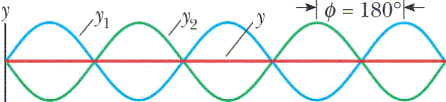
Destructive Interference When
φ = π (crest meets trough), then cos
(φ/2) = 0 and the
amplitude of the resultant wave is 0 |
The wave
are “out of phase.” |
|||||||||||||||||||||||||
|
When
φ is other than 0 (or an even multiple of π), the amplitude of the resultant is between 0 and 2A The
wave functions still add. |
|
|||||||||||||||||||||||||
|
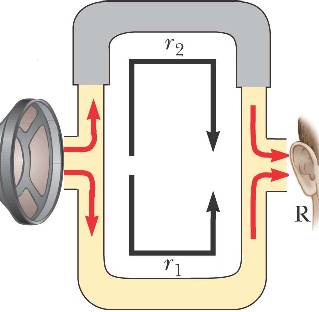
Sound
from the speaker can reach the receiving ear, R, by two different paths. The
upper path can be varied Constructive
interference occurs @ Δr = |r2 – r1| = n λ (n
= 0, 1, …) Destructive
interference occurs @ Δr = |r2 – r1| = (n/2) λ (n is odd) φ
occur à unequal path lengths φ
= Δr
(2π λ) |
|
|||||||||||||||||||||||||
|
Constructive Interference Δr = 2n λ/2 |
Destructive Interference Δr = (2n+1) λ/2 |
|||||||||||||||||||||||||
|
Example Two waves are traveling in the same direction along a stretched
string. The waves are 90.0° out of phase. Each wave
has an amplitude of 4.00 cm. Find the
amplitude of the resultant wave. |
y = 4 sin(kx – ωt) + 4 sin(kx – ωt +
90°) Apply below trig identity y
= 2(4) cos(90°/2) sin(kx-ωt + 90°/2) y
= 8 cos(45°) sin (kx - ωt + 45°) A = 8 cos(45°) A = 5.66 cm |
|||||||||||||||||||||||||
|
Use
the trig identity à y = A sin (kx - ωt) + A sin (kx - ωt + φ) sina + sinb =
2[cos(a-b)/2][sin(a+b)/2] y =
2A cos (φ /2) sin (kx - ωt + φ
/2) |
||||||||||||||||||||||||||
|
Demo: Destructive Interference Speakers: OW-B-DI |
||||||||||||||||||||||||||
|
Standing Waves |
||||||||||||||||||||||||||
|
Given two identical waves, y1 = A
sin (kx – ωt) and y2 = A sin (kx + ωt),
they interfere according to the superposition principle & with the trig
identity: sin(a±b)
= sina cosb ± cosa sinb (Application Exercise: Apply the
above identity) we
know y = y1 + y2 is
y = (2A sin kx) cos ωt ß This is the wave function of
a standing wave There
is no kx – ωt term; therefore it is not a
traveling wave, thus it’s called a standing wave (appears to stands still) There
are three types of amplitudes used in describing waves v The amplitude
of the individual waves, A v The amplitude
of the simple harmonic motion of the elements in the medium, § 2A sin kx v The amplitude
of the standing wave, 2A |
|
|||||||||||||||||||||||||
|
Nodes occurs at a point of
zero amplitude x
= n λ /2 à n = 0, 1, 2, … |
Antinode occurs at a point of
maximum displacement, 2A x
= n λ /2 + λ /4 à n = 0, 1, 2, … |
|||||||||||||||||||||||||
|
Recall: Resonance in Air Column from lab |
|
|||||||||||||||||||||||||
|
Example Two sinusoidal waves traveling in opposite directions interfere
to produce a standing wave with the wave function, y = (1.50 m)
sin(0.400x) cos(200t), where x is in meters and t is in seconds. Determine the wavelength,
frequency, and speed of the interfering waves. |
apply
trig identity sin(a±b)
= sina cosb ± cosa sinb (a
= kx and b = ωt) to y = A sin (kx - ωt) + A sin (kx + ωt) sin(a±b) = sina cosb ± cosa sinb sin (kx - ωt) = sin kx cos ωt - cos kx sin ωt sin (kx + ωt) = sin kx cos ωt + cos kx sin ωt sin (kx
- ωt) + sin (kx + ωt) = 2 sin kx cos ωt y = (1.50 m) sin(0.400x) cos(200t) |
|
||||||||||||||||||||||||
|
k = 2 π /l 0.4
= 2 π /l l = 5 π l = 15.7 meters |
ω = 2π f 200 = 2 π f f = 100/ π f = 31.8 Hz |
|
||||||||||||||||||||||||
|
v
= f
l v
= 31.8 (15.7) v = 500 m/s |
|
|||||||||||||||||||||||||
|
Demo:
Standing Waves, Cenco String: OW-B-SC |
|
|||||||||||||||||||||||||
|
Standing Waves in a
String Fixed at Both Ends |
||||||||||||||||||||||||||
|
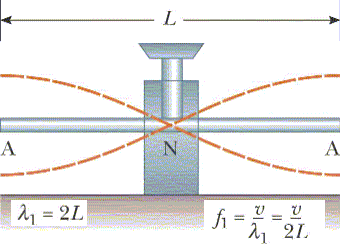
Consider a string fixed at both ends of length L v Standing waves are set
up by a continuous superposition of waves incident on and reflected from the
ends v There is a boundary
condition on the waves |
|
|||||||||||||||||||||||||
|
|
||||||||||||||||||||||||||
|
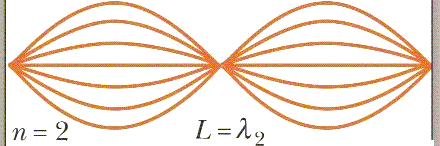
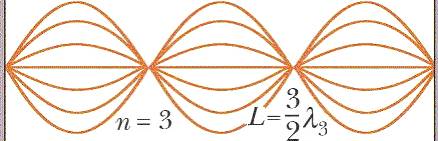
v
The wavelengths of the normal modes for a string of length L
fixed at both ends are λ= 2L / n n = 1, 2, 3, … v
n
is the nth normal mode of oscillation v
These are the possible modes for the string |
The
natural frequencies are fnat
= n v / 2L fnat
= n √(FT/μ)/ 2L |
|||||||||||||||||||||||||
|
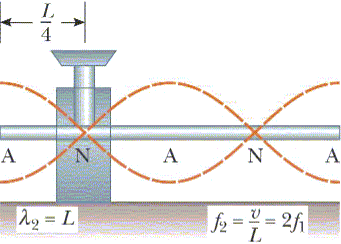
The above situation in which only certain
frequencies of oscillation are allowed is called quantization The fundamental frequency occurs at n = 1, and is the lowest frequency,
ƒ1 Harmonics are integral multiples
or the fundamental frequency and together they form the harmonic series
|
Quantization
is a common occurrence when waves are subject to boundary conditions
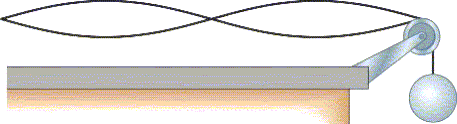
The above string is vibrating in its second
harmonic |
|||||||||||||||||||||||||
|
A musical note is defined by its fundamental
frequency, (n = 1) The frequency of the string can be
changed by changing either its length or its tension (changing it’s boundary
condition) |
Example: A middle “C” on a piano has a
fundamental frequency of 262 Hz. What
are the next two harmonics of this string? |
Ans: ƒ1 = 262 Hz ƒ2 = 2ƒ1 = 524 Hz ƒ3 = 3ƒ1 = 786 Hz |
||||||||||||||||||||||||
|
Example Find the fundamental frequency and the next three frequencies that
could cause standing-wave patterns on a string that is 30.0 m long, has
a mass per length of 9.00 x 10⁻³ kg/m, and is stretched to a
tension of 20.0 N. |
v2
= FT / μ v2
= 20 / .009 v
= 47.1 m/s fnat
= n v/2L f1
= n v/2L f1
= 47.1/(2*30) f1 = 0.786 Hz |
f2
= 2(47.1)/(2*30) f2 = 1.57 Hz f3
= 3(47.1)/(2*30) f3 = 2.36 Hz f4
= 4(47.1)/(2*30) f4 = 3.14 Hz |
||||||||||||||||||||||||
|
Resonance |
||||||||||||||||||||||||||
|
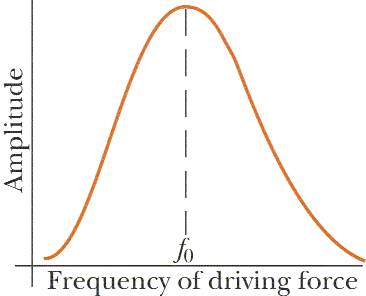
Resonance
can occur in systems that are capable of oscillating in one or more normal
modes |
||||||||||||||||||||||||||
|
If
a periodic force is applied
to such a system, the amplitude of the resulting motion is greatest when the frequency
of the applied force is equal to one of the natural frequencies of the system Because
an oscillating system exhibits a large amplitude when driven at any of its
natural frequencies, these frequencies are referred to as resonance
frequencies, ƒo = largest amplitude The
maximum amplitude is limited by friction in the system (of the medium
the wave is traveling) |
|
|||||||||||||||||||||||||
|
Example The chains suspending a child's swing are 2.00 m long. At what frequency should a big brother push
to make the child swing with largest amplitude? |
ω = √(g/L) 2πf = √(g/L) 2πf = √(9.8/2) f = 0.352 |
|||||||||||||||||||||||||
|
Standing Waves in Air
Columns |
||||||||||||||||||||||||||
|
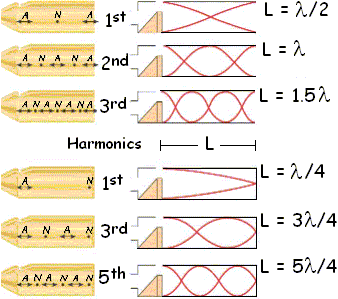
The
closed end of a pipe is a displacement node because the wall at this end
doesn’t allow longitudinal motion of the air molecules. Thus the reflected wave is 180° out of
phase with the incident wave. Also
the pressure wave is 90° out of phase with the displacement wave, 17.2, we
know the closed end of the tube corresponds to a pressure ANTINODE. The
open end is a displacement |
Closed one end fnat
= n v/4L v = f1 λ Open both ends fnat
= n v/2L |
|
||||||||||||||||||||||||
|
|
||||||||||||||||||||||||||
|
Example The overall length of a piccolo is 32.0 cm. The resonating air
column vibrates as in a pipe open at both ends. (a) Find the frequency of the lowest note
that a piccolo can play, assuming that the speed of sound in air is 340
m/s. (b) Opening holes in the side
effectively shortens the length of the resonant column. If the highest note a
piccolo can sound is 4000 Hz, find the distance between adjacent antinodes
for this mode of vibration. |
(a) dAtoA = 0.320 m L
= λ /2 λ = 0.32 (2) λ = 0.64 meters v = f
λ 340
= f 0.64 f
= 531 Hz |
(b) v = f
λ 340
= 4000 λ λ = 0.0850 m dAtoA = 0.0425 m |
||||||||||||||||||||||||
|
Standing Waves in Rods
and Membranes |
||||||||||||||||||||||||||
|
|
||||||||||||||||||||||||||
|
If
a rod is clamped at a node, then a standing wave may be set up in a rod. Just add energy by rubbing rosin pad or similar
material along the length of the unclamped portion of the rod. |
||||||||||||||||||||||||||
|
An aluminum rod is clamped one quarter of the way along its
length and set into longitudinal vibration by a variable-frequency driving
source. The lowest frequency that produces resonance is 4400 Hz. The speed of
sound in an aluminum rod is 5100 m/s. Determine the length of the rod. |
When
the rod is clamped at one-quarter of its length, the vibration pattern reads
ANANA and the rod length is L = 2dAtoA = λ. v =
f L à v = f λ 5100
= 400(L) L = 1.16 meters |
|||||||||||||||||||||||||
|
Beats: Interference in
Time |
||||||||||||||||||||||||||
|
Beating
is the periodic variation in amplitude at a given
point due to the superposition of two waves having slightly different
frequencies. |
y1
= A cos ω1t y1
= A cos 2πf1t |
y2
= A cos ω2t y2
= A cos 2πf2t |
||||||||||||||||||||||||
|
cos a + cos b = 2cos((a-b)/2)cos((a+b)/2) y
= y1 + y2 y
= A cos 2πf1t + A cos 2πf2t apply the above
trig identity y
= 2Acos((2πf1t - 2πf2t)/2)cos((2πf1t
+ 2πf2t)/2) y
= 2Acos((2πt(f1 - f2)/2) cos((2πt(f1
+ f2)/2) y
= Anew cos((2πt(f1 +
f2)/2) |
||||||||||||||||||||||||||
|
where
Anew = 2Acos((πt(f1 - f2)) ß |
||||||||||||||||||||||||||
|
And
cos((2πt(f1 - f2)/2) = ± 1 Since
amplitude varies with ½(f1 - f2) we get two max amplitudes during one
period So we get a beat à fbeat
= |f1 – f2| |
||||||||||||||||||||||||||
|
Example In certain ranges of a piano keyboard, more than one string is
tuned to the same note to provide extra loudness. For example, the note at 110
Hz has two strings at this frequency. If one string slips from its normal
tension of 600 N to 540 N, what beat frequency is heard when the hammer
strikes the two strings simultaneously? |
fλ = v = (FT/μ)1/2 fnew
/ f = (FT-new/ FT)1/2 fnew
/ 110 = (540/ 600)1/2 fnew
= 104.4 Hz Δf
= 110 – 104.4 Δf
= 5.64 beats/sec |
|||||||||||||||||||||||||
|
Demo: Differential Tuning Forks: OW-B-DF |
||||||||||||||||||||||||||
|
Non-sinusoidal Wave
Patterns |
||||||||||||||||||||||||||
|
Since
the wave pattern of non-sinusoidal wave patterns are periodic, we can
represent this as a combination of sinusoidal waves that form a harmonic
series by implementing Fourier’s theorem (by Jean Baptiste Joseph Fourier, 1786-1830). y(t)
= Sn (An sin 2pfnt + Bn
cos 2pfnt)
where
f1 = 1/T and fn = nf1 and An, Bn
are amplitudes of the waves corresponding to each n as n = 1 to n
|
||||||||||||||||||||||||||
|
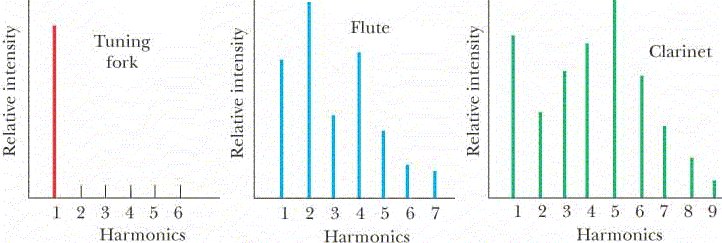
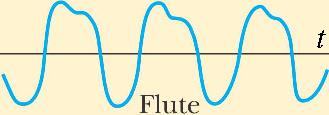
Example Suppose that a flutist plays a 523-Hz C note with first harmonic
displacement amplitude A1
= 100 nm. Read, by proportion, the
displacement amplitudes of the above flute for harmonics 2 through 7. Take these as the values A2 through A7 in the Fourier
analysis of the sound, and assume that B1
= … = B7 = 0. Construct a graph of the waveform of the
sound. Your waveform will not look
exactly like the flute waveform because you simplify by ignoring cosine
terms; nevertheless, it produces the same sensation to human hearing. |
||||||||||||||||||||||||||
|
We
evaluate y(t)
= |
|
|||||||||||||||||||||||||
|
s = 100sinθ
+ 157sin2θ + 62.9sin3θ + 105sin4θ + 51.9 sin5θ + 29.5 sin6θ +
25.3 sin7θ |
||||||||||||||||||||||||||
|
where
s represents particle displacement in nanometers and θ represents the
phase of the wave in radians. As θ advances by 2π, time advances by
(1/523) s. |
||||||||||||||||||||||||||
|
|
|
|||||||||||||||||||||||||
|
||||||||||||||||||||||||||