LARGE BONUS for the course!!!!!!!!!
Attend your local townhall meetings and propose….e.g.
· Annoying Traffic? Introduce and show that timed traffic lights can reduce idling vehicles (and improve traffic flow) at peak traffic hours
· How about obtaining funding to convert some grills in parks to natural gas, or develop a program to encourage charcoal over wood
· Using both proven and/or innovative techniques to increase recycling
· Know of any cities that need more bike lanes that can significantly reduce number of cars that commonly travel short distances.
These are not just for Science students, some of these projects are great Psych, Sociology, or even business students)
Other research opportunities in the course:

CalPoly is already part of the https://datasciencefederation.lacity.org/about-us LA City data science federation. In this federation, university students collaborate in analyzing and interpreting data for community groups and others.
|
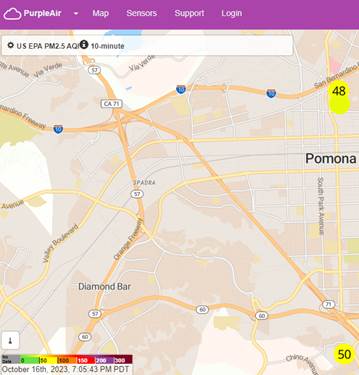
Other research opportunities: Check out low-cost sensors from the AQMD AQ-SPEC sensor (through our class) library and add to existing data networks where “your research group (you and your friends)” believe there may be a problem with the air quality.
E.g. https://map.purpleair.com/ There are even more opportunities.
|
|
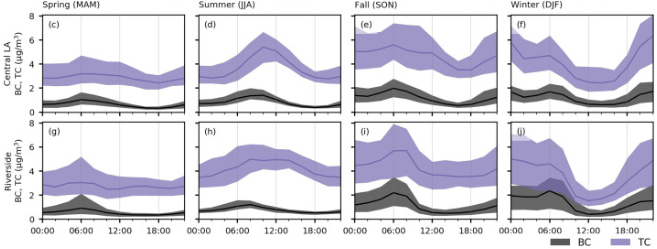
Use existing data sets from CARB and AQMD and perform analyses that have never been done.
This has the possibilities of publishing in journals like AGU, AWMA, AAAR , or competing in our RSCA student research competitions.




Are there diurnal trends for Ultra Fine particles.
What about diesel soot (Black Carbon)?
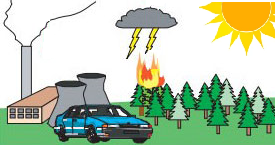
What drives the Ozone in our basin?
Data source: IPCC Fourth Assessment Report Working Group I Report “The Physical Science Basis“ (Denman et al. 2007)
Download the data and show this!!
Check out low-cost sensors from the sensor library if you believe certain areas are lacking coverage.
Do you know certain areas are lacking coverage of some pollutants? Do you know of any hosts (homes or businesses) in these areas that you could install a low-cost sensor?
What about developing a system for a low-cost/low power sensor using Arduino and solar panels to place the data online real-time.